Table of Contents
- Rhode Island Home Selling
- Which Areas in Rhode Island Offer the Best Return on Investment and Are Easiest for Residential Property Development?
- What Home Styles, Sizes, and Features Tend to Sell Fastest in the Rhode Island Market?
- What Should Home Sellers Know About Zoning Laws, Permits, and Regulatory Requirements in Rhode Island?
- Which Towns or Cities in Rhode Island Are Easiest, and Hardest, When It Comes to Navigating Real Estate Regulations?
- What Are the Most Effective Flipping and Resale Strategies for Maximizing Profit in Rhode Island's Housing Market?
- How Should Sellers Price Their Homes to Attract Buyers While Maximizing Value in Rhode Island?
- Which Key Economic, Social, and Regulatory Factors Are Driving Current Trends in Rhode Island's Local Property Markets?
Rhode Island Home Selling
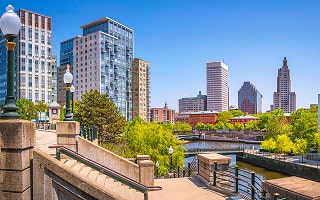
Ongoing revitalization efforts in Rhode Island continue to add to the appeal of the real estate market in the Ocean State. As of October 2025, the typical home value in Rhode Island stood at $487,363. While this number exceeds the national median sale price of around $415,000 and the median sale price in neighboring Connecticut ($449,100), housing in the Ocean State remains significantly more affordable than in Massachusetts ($660,000).
Overall, the housing market in Rhode Island remains one of the hottest in the country, though affordability continues to pose major challenges. According to Realtor.com's Affordability and Homebuilding Report Cards, Rhode Island ranked dead last among all states. The state's F rating reflects high home prices relative to the median income, as well as permitting activity relative to the share of the U.S. population.
While the number of homes for sale climbed 5.3% year over year in October 2025, the state continues to contend with severe inventory shortages, supporting a seller's market with an average of just 2 months of supply. During the same period, more than 45% of homes sold above asking, with a statewide sale-to-list price ratio of 100%.
Unsurprisingly, the pace of home sales in Rhode Island remains quick, with properties spending a median of just 37 days on the market. This figure is one of the fastest in Southern New England, beating out Massachusetts (39 days) and Connecticut (41 days), as well as the national median of 63 days.
The state's slow rate of construction is another key factor contributing to elevated prices, quick sales, and affordability challenges. While the national rate of new housing authorizations was roughly 4.35 per 1,000 residents in 2024, Rhode Island had just 1.60 per 1,000 residents.
In terms of property taxes, Rhode Island's average effective rate of 1.32% ranks it the 13th highest in the nation. While some states in the region, including Connecticut, New Hampshire, and Vermont, charge higher property tax rates, Rhode Island's rate presents another barrier to affordability for many residents.
Despite affordability issues, Rhode Island sees relatively few foreclosures, with a rate of 1 in every 8,355 housing units (as of October 2025). This figure highlights market stability, even as supply expands and the rate of growth continues to slow.
Which Areas in Rhode Island Offer the Best Return on Investment and Are Easiest for Residential Property Development?
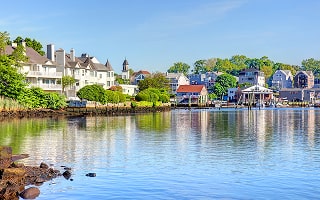
There are many compelling reasons to invest in the Rhode Island real estate market. Its strategic location on the East Coast makes it highly accessible to visitors and commuters from several large metro areas, including New York City and Boston.
The presence of notable higher-education institutions, such as Providence College, the University of Rhode Island, and Brown University, generates consistent demand for rental properties. In addition, many towns and cities in the state have undergone revitalization efforts recently, adding to the appeal of Rhode Island's real estate market.
Although Rhode Island is one of the smallest states in the country (both by land area and population), it still offers diverse opportunities for investors in its housing market. For investors aiming to maximize profits, the following locations may be well positioned to offer attractive returns:
-
Pawtucket: This city has seen steady appreciation in property values and is one of the top real estate investment markets in Rhode Island. It offers affordable housing, a strong rental base, and proximity to Providence, making it ideal for both flippers and buy-and-hold investors.
-
East Providence: High rental demand, short market cycles, and solid tenant turnover make East Providence a strong choice for landlords. The city continues to benefit from spillover interest from the Providence metro, boosting investor returns.
-
Central Falls: One of the most densely populated cities in the state, Central Falls combines limited inventory with high demand. Its affordability and consistent pool of renters make it a top option for cash-flow-focused investors.
-
Lincoln: Lincoln's blend of suburban character, limited new construction, and strong schools sustains the potential for strong price appreciation among single-family homes.
-
Elmwood: Elmwood's historic homes and ongoing revitalization efforts appeal to value-add investors. It has strong appreciation potential for those interested in renovating historic properties.
-
East Side (Providence): Home to Brown University and Rhode Island School of Design (RISD), the East Side is one of the state's most stable housing markets. The area's architectural charm, university anchors, and high demand make it one of the most desirable long-term investment areas in the state.
-
Newport: With limited developable land, historic charm, and a booming tourism-driven rental market, Newport sees strong year-round demand, particularly in its waterfront districts.
-
Cranston: A family-oriented suburb with good schools and accessible transport routes, Cranston provides a balanced environment for both homebuyers and renters. For investors, this translates to a more stable market and the potential for moderate long-term returns.
-
Warwick: Located near the state's main airport and highway network, Warwick has a diverse housing stock and strong economic drivers. Investors benefit from steady rental demand and affordable entry points.
-
Kingston: Anchored by the University of Rhode Island, Kingston sees strong year-round rental demand from students and faculty. The village may be a good fit for investors seeking consistent rental income and seasonal appreciation.
What Home Styles, Sizes, and Features Tend to Sell Fastest in the Rhode Island Market?
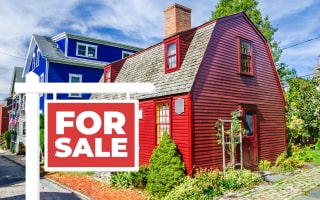
Local markets in Rhode Island typically experience high demand, especially in urban cores, coastal towns, and commuter suburbs. Generally, homes in the state sell faster than the U.S. average, with the typical home spending about 37 days on the market before going under contract. In high-demand areas like Cranston, Cumberland, and Pawtucket, many listings sell within a month, while hotter neighborhoods in the Providence metro can see offers within two weeks.
Though homes in Rhode Island tend to sell quickly, certain property features may result in even faster offers and more competition. The fastest-selling home features include:
-
![]()
Bedrooms: Across much of the state, 3- to 4-bedroom, 2-bathroom single-family homes sell the fastest. Homes with this layout are often considered the sweet spot for family buyers, offering enough space for growing households without pricing beyond the mid-market range. Such homes are especially popular in suburban areas like Warwick, Cranston, and North Kingstown, where schools and commuter access are strong.
-
![]()
Size and Lot: Properties sized between 1,500-2,500 square feet on 0.25- to 0.5-acre lots tend to move quickly in Rhode Island. In suburban markets within the state, these dimensions strike a balance between functional indoor living space and manageable yards. In contrast, many buyers in urban cores like Providence and Pawtucket opt for slightly smaller footprints in the 1,500- to 2,000-square-foot range, prioritizing walkability and lower upkeep costs.
-
![]()
Style: Rhode Island buyers lean toward classic New England architecture paired with modern function. Cape Cod and Colonial-style homes remain top sellers due to their timeless curb appeal, while updated Victorian cottages in historic districts like Providence's Elmwood and Federal Hill attract design-savvy buyers. In suburban communities, ranch-style, Craftsman, and modern farmhouse homes perform well, while condos and townhouses in downtown Providence and East Greenwich are fast-selling options that appeal to professionals and downsizers.
-
![]()
Modern Upgrades: Regardless of style, homes with open-concept kitchens, energy-efficient appliances, updated bathrooms, and fresh neutral paint consistently sell faster in Rhode Island. Exterior touches like enhanced landscaping and inviting entryways boost curb appeal and help listings stand out. Additionally, move-in-ready condition is particularly important in competitive areas, where buyers are willing to pay a premium to avoid major renovations.


What Should Home Sellers Know About Zoning Laws, Permits, and Regulatory Requirements in Rhode Island?
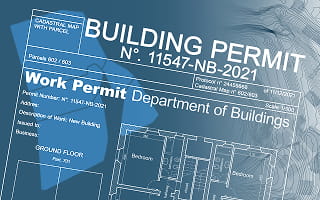
Zoning ordinances in Rhode Island classify land into residential, commercial, industrial, and mixed-use districts. According to these ordinances, each district imposes rules on setbacks, lot coverage, building heights, and permitted uses. Understanding these ordinances and local land-use rules is important in maximizing a property's value and avoiding costly delays.
Note that buyers often request a zoning compliance letter to confirm that the property's existing use and improvements conform to current regulations, and that there are no open zoning violations. For sellers looking to flip a property, obtaining a zoning compliance letter, even when it isn't specifically requested, can offer buyers more confidence when closing a sale.
With variation in the strictness and flexibility of zoning laws around Rhode Island, it's important to recognize which areas tend to be more, and less, development friendly.
-
Areas with strict zoning laws: These municipalities strictly enforce zoning via comprehensive plans, permits, and limited variance flexibility. For instance, places like Providence, Newport, and East Greenwich have strict zoning laws. Providence enforces stringent Central Business District regulations and numerous historic-overlay zones that restrict building height, permitted uses, and exterior modifications. In Newport, coastal and floodplain overlay districts impose stringent controls on new construction and major renovations, particularly where shoreline and flood risks are concerned. Also, East Greenwich limits infill development through strict setback, lot-coverage, and streetscape requirements designed to maintain the town's suburban character.
-
Areas with less bureaucratic zoning laws: Locations such as Coventry and West Warwick have embraced unified development reviews under recent state reforms, merging planning and zoning hearings into a single application that significantly expedites approvals.
-
Areas where a special permit is required via a public hearing and approval from the zoning board: Obtaining special permits via public hearing and zoning board approval is typical across many Rhode Island jurisdictions when the proposed use deviates from standard zoning permissions. For example, Cranston and Pawtucket require special use permit hearings before the Zoning Board of Review for projects like multiunit developments, home-business conversions, and most nonconforming uses. Burrillville similarly mandates public notices be published 14 days before hearings on commercial-to-residential conversions and certain accessory structures.
-
Areas where a Certificate of Occupancy (CO) is mandatory before legal occupation: Providence insists that all new occupancies and changes of use require either a temporary or final CO before legal occupation. This is done to confirm compliance with building codes and zoning regulations. Also, in Warwick, the CO process hinges on final approvals for stormwater management, fire-safety systems, and comprehensive building inspections, preventing closings from proceeding until every municipal sign-off is documented.
-
Areas where a historic commission must approve certain renovations, material usage, and changes of appearance: The Newport Historic District requires Historic District Commission approval for nearly all exterior alterations in order to preserve its heritage. In Providence's East Side, landmark and historic-district properties are subject to rigorous design review for materials, roofscapes, and facade treatments. Local historic commissions in Barrington and Bristol also review applications for roofing materials, fencing, and porch renovations, ensuring every detail aligns with each district's historic character.
Which Towns or Cities in Rhode Island Are Easiest, and Hardest, When It Comes to Navigating Real Estate Regulations?

Home sellers and developers in Rhode Island are advised to verify local zoning laws and permit requirements before investing or listing, as these can impact a property's marketability and value. Failing to understand and comply with local regulations can cause costly delays, legal entanglements, and potential losses in value. Therefore, distinguishing between areas that allow projects to move quickly and those that include additional layers of review can be the difference between a successful investment and extended holding times.
Development-Friendly Areas
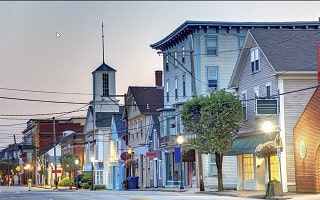
These cities and towns are known for being pro-growth, with streamlined permitting, zoning flexibility, and municipal support for housing and economic development.
- Foster: Though the town works to preserve its rural character, its Economic Development Strategy includes several possible growth opportunities for developers.
- Richmond: Richmond emphasizes residential growth and simplified land-use codes to encourage development.
- West Greenwich: While the town is largely rural, it actively promotes flexible development near the I-95 Corridor.
- Hopkinton: Hopkinton offers cooperative town planning staff and fewer permit layers.
- Exeter: The zoning code in Exeter facilitates large-lot residential construction with fewer design constraints.
- Lincoln: Lincoln balances smart growth with efficient permitting processes, especially for suburban developments.
Moderately Regulated Areas
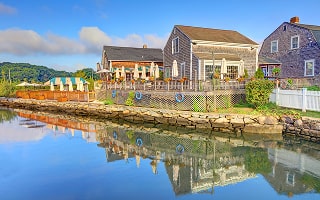
These municipalities feature moderate land-use controls, where development is generally permitted but may be subject to zoning board approvals, predictable review timelines, and enforced design standards.
- Cumberland: Cumberland implements development standards with clear zoning layers, with some neighborhoods requiring zoning variances.
- East Providence: The city takes a balanced approach to residential expansion, with some waterfront areas requiring additional review.
- Smithfield: Smithfield has predictable permitting for most residential types, but maintains strong environmental zoning protections.
- Burrillville: The town has established zoning procedures with some requirements for public input, especially near conservation lands.
- Middletown: This historic town allows development but enforces standards around density, coastal setbacks, and mixed-use compatibility.
- North Kingstown: North Kingstown is generally development friendly, but applies stricter oversight in historic or coastal overlay zones.
Highly Restrictive or Bureaucratic Areas

These jurisdictions are known for community resistance to development, historic district oversight, detailed land-use codes, and multistep permitting processes.
- Providence: The state capital is known for dense urban zoning, strict code enforcement, and extensive historic preservation districts, such as College Hill and Elmwood.
- Newport: Newport mandates heavy architectural review in historic areas; development is typically slow and often challenged by residents.
- Pawtucket: The City of Pawtucket regulates development heavily in historic zones like Quality Hill. It also imposes layered zoning and inspection requirements.
- Cranston: In Rhode Island's second-largest city, zoning compliance, variances, and certificates of occupancy are tightly managed with multiple review boards.
- Warwick: Warwick frequently mandates zoning board reviews; even minor additions often require hearings or special permits.
- Jamestown: Jamestown has a strong preservation culture, especially in districts like Shoreby Hill. As a result, the town sees minimal support for new dense development.
- Narragansett: The town has heavy conservation and coastal overlays that restrict new housing projects. Regulations prioritize scenic and environmental protections.
Regulatory Climate Factors

In Rhode Island, the real estate regulatory climate can differ widely between jurisdictions. These differences significantly influence how challenging it is to develop, renovate, or flip a property. Consequently, understanding which areas feature flexible zoning codes, strict preservation rules, environmental limits, or political resistance is critical for investors, builders, and home sellers aiming to maximize returns and avoid costly delays.
The table below outlines key regulatory factors shaping Rhode Island's real estate market, their effects on development, and the specific local markets where these factors are most prevalent:
Factor |
Impact on Development |
Where It's Found |
|---|---|---|
Zoning Flexibility |
Determines ease of land use |
Warwick, Cranston, and parts of Pawtucket |
Historic Preservation Laws |
Adds restrictions |
Providence (College Hill, Elmwood, Federal Hill), and Newport |
Wetlands/Conservation |
Limits buildable land |
South Kingstown, Charlestown, and Tiverton |
Inclusionary Zoning |
Requires affordable units |
Providence, Newport, and East Greenwich |
Building Code Enforcement |
Affects cost/speed |
Providence, Warwick, and Cranston |
Local Politics/NIMBYism* |
Blocks or delays projects |
Jamestown, Barrington, and parts of East Greenwich |
*NIMBYism - Not in My Backyard
What Are the Most Effective Flipping and Resale Strategies for Maximizing Profit in Rhode Island's Housing Market?

Traditional house flipping in Rhode Island involves acquiring a property, often at a discounted price, renovating it, and reselling it at a higher price to clear a profit. When approached strategically, this can be a highly profitable real estate investment method. The Ocean State's housing market, with its mix of historic homes, coastal properties, and competitive suburban neighborhoods, offers unique opportunities for investors who tailor their approach to local conditions.
Below are some of the most effective flipping and resale strategies for maximizing ROI in Rhode Island:
-
![]()
Target Distressed or Foreclosed Homes: This strategy is effective in older urban markets with higher foreclosure activity, such as Providence, Pawtucket, and Woonsocket, where distressed properties can be bought well below market value and updated for resale. It involves purchasing pre-foreclosures, REOs (i.e., bank-owned properties), and short sales at significant discounts, as they generally provide solid profit margins after renovations.
-
![]()
Use the 70% Rule [Maximum Offer = (ARV x 70%) - Repair Costs]: The 70% rule helps protect profit margins by preventing investors from overpaying for properties. It advises buyers to offer no more than 70% of the after-repair value (ARV), minus the renovation costs. It works best in areas with stable, comparable sales, such as Cranston, Warwick, and Johnston, where consistent price data supports accurate ARV estimates.
-
![]()
Try Wholetailing for Speed: This approach recommends making minimal, cosmetic-only repairs before relisting the property to yield quick returns without extensive renovation timelines. It's especially useful in low-inventory, high-demand markets such as Barrington, East Greenwich, and parts of Middletown.
-
![]()
Build Strong Deal Pipelines with Lead Gen: This approach recommends developing a strong network that consistently delivers good deals before they hit the open market. By nurturing agent partnerships or using direct mail campaigns, agents can open up access to a consistent flow of opportunities. This method is especially valuable in competitive locations such as Newport, Providence's East Side, and Narragansett, where competition for well-located homes can be intense.
-
![]()
Renovate with Quality, Don't Cut Corners: In certain markets where higher-end buyers consistently demand modern properties with high-quality finishes, ensuring that renovations and development involve quality materials and craftsmanship is recommended in order to make quick sales. In Rhode Island, these markets include Barrington, Jamestown, and East Greenwich.
-
![]()
Follow the BRRRR Method (Buy, Rehab, Rent, Refinance, Repeat): The BRRRR approach recommends that investors buy a property, rehab it, and then rent it out. Once the tenant is in place, they can refinance and repeat the process to generate steady rental income while recouping renovation capital for additional projects. This strategy is recommended for denser areas with strong rental demand, such as Providence, Central Falls, and Pawtucket.
-
![]()
Try Value-Add Flipping (Go Beyond Cosmetic Work): In upscale markets like Newport, Narragansett, and Jamestown, adding square footage, reconfiguring layouts, and installing high-end kitchens or baths may significantly boost value, especially for buyers seeking turnkey coastal or luxury properties.
-
![]()
Leverage Auction and Off-Market Buying Strategies: Developers and investors in local markets like Woonsocket, Pawtucket, and West Warwick can use this approach to acquire deeply discounted properties via bank auctions, courthouse sales, and wholesaler networks. This method can also be used in places where competition is lower and there are frequent opportunities to secure undervalued properties.
-
![]()
Invest in Tax Liens or Tax Deeds: In Rhode Island municipalities such as Providence, Woonsocket, and Pawtucket, acquiring properties through tax lien sales is often a valuable strategy. Once title issues are resolved and renovations are completed, these properties can be resold for a healthy profit.
-
![]()
Target FHA 203(k) Buyers: This approach recommends marketing homes that are suited for FHA-backed renovation loans, targeting first-time buyers or others who rely on the 203(k) loan program. It works well in first-time buyer-friendly markets such as Cranston, Warwick, and Johnston, where FHA financing helps younger buyers enter the market.
-
![]()
Stage and Price Strategically: This approach recommends hiring skilled stagers to highlight the property's best features, and adopting a strategic pricing method to position the property's list price to spark competitive bids. Using this approach in Rhode Island's hottest corridors, including Providence, Barrington, East Greenwich, and Bristol, can help accelerate sales and maximize returns.


How Should Sellers Price Their Homes to Attract Buyers While Maximizing Value in Rhode Island?

While overpricing homes in the Rhode Island real estate market could result in listings sitting on the market for too long, underpricing a property could risk leaving money on the table. To set a competitive list price, home sellers in Rhode Island are advised to work with local real estate agents or certified appraisers who are familiar with neighborhood trends. These professionals can analyze pending, active, and recently sold comparable properties within the past 90 days to determine competitive yet profitable pricing to help maximize return on investment.
Some of the most effective pricing strategies to help facilitate successful home sales in Rhode Island are listed below:
-
![]() Pricing Just Below Below Market Thresholds: This strategy involves listing a home just under a key market cutoff to capture more buyer interest. For example, pricing at $490,000 instead of $500,000 may draw buyers searching for properties under half a million dollars, increasing traffic and offers. In Rhode Island, this works well in competitive mid-tier markets where affordability is a driving factor, such as Warwick, Cranston, Johnston, and Cumberland.
Pricing Just Below Below Market Thresholds: This strategy involves listing a home just under a key market cutoff to capture more buyer interest. For example, pricing at $490,000 instead of $500,000 may draw buyers searching for properties under half a million dollars, increasing traffic and offers. In Rhode Island, this works well in competitive mid-tier markets where affordability is a driving factor, such as Warwick, Cranston, Johnston, and Cumberland.
-
![]() Charm Pricing (Psychological Pricing): Charm pricing is particularly effective in Rhode Island's budget-conscious and starter-home markets like Pawtucket, West Warwick, and Woonsocket. This approach uses psychology to create the perception of a better deal, for example, listing at $299,999 instead of $300,000, to appeal to buyers shopping within strict budget caps.
Charm Pricing (Psychological Pricing): Charm pricing is particularly effective in Rhode Island's budget-conscious and starter-home markets like Pawtucket, West Warwick, and Woonsocket. This approach uses psychology to create the perception of a better deal, for example, listing at $299,999 instead of $300,000, to appeal to buyers shopping within strict budget caps.
-
![]() Pricing to Create a Bidding War: To potentially push the final sale price above asking, sellers can list slightly below market value to generate multiple offers. This strategy works best in areas with low housing inventory and strong buyer demand, especially in family-friendly neighborhoods with reputable schools. In Rhode Island, such markets include Barrington, East Greenwich, Narragansett, and certain parts of North Kingstown.
Pricing to Create a Bidding War: To potentially push the final sale price above asking, sellers can list slightly below market value to generate multiple offers. This strategy works best in areas with low housing inventory and strong buyer demand, especially in family-friendly neighborhoods with reputable schools. In Rhode Island, such markets include Barrington, East Greenwich, Narragansett, and certain parts of North Kingstown.
-
![]() High-Anchor Pricing (Test the Waters): With this method, sellers list above the expected market value to capture high-end buyers willing to pay a premium. This approach allows sellers to test upper pricing limits before negotiating or adjusting the price based on buyer feedback. It's ideal for luxury and waterfront markets with affluent buyer pools, such as Newport, Jamestown, and Watch Hill in Westerly.
High-Anchor Pricing (Test the Waters): With this method, sellers list above the expected market value to capture high-end buyers willing to pay a premium. This approach allows sellers to test upper pricing limits before negotiating or adjusting the price based on buyer feedback. It's ideal for luxury and waterfront markets with affluent buyer pools, such as Newport, Jamestown, and Watch Hill in Westerly.
-
![]() Price-Per-Square-Foot Benchmarking: Price-per-square-foot benchmarking advises sellers to match their asking price to the average cost per square foot of similar homes in their neighborhood. This approach suits areas with consistent housing styles and solid comparable sales data, such as Lincoln, Smithfield, and parts of Middletown.
Price-Per-Square-Foot Benchmarking: Price-per-square-foot benchmarking advises sellers to match their asking price to the average cost per square foot of similar homes in their neighborhood. This approach suits areas with consistent housing styles and solid comparable sales data, such as Lincoln, Smithfield, and parts of Middletown.
-
![]() Appraisal-Backed Pricing: This approach bases pricing on a licensed appraiser's valuation, factoring in property condition and recent sales. The strategy works well in financing-heavy markets with diverse housing stock, such as Providence, Warwick, and Pawtucket, where buyers often rely on mortgage approvals that align with appraisal values.
Appraisal-Backed Pricing: This approach bases pricing on a licensed appraiser's valuation, factoring in property condition and recent sales. The strategy works well in financing-heavy markets with diverse housing stock, such as Providence, Warwick, and Pawtucket, where buyers often rely on mortgage approvals that align with appraisal values.
-
![]() Net-to-Seller Pricing: With this method, sellers arrive at a listing price by calculating a dollar figure that ensures their target net proceeds after closing costs and mortgage payoff. It's especially relevant for downsizers, retirees, or sellers with specific financial goals, and is common in places like Cranston, East Providence, and Warwick.
Net-to-Seller Pricing: With this method, sellers arrive at a listing price by calculating a dollar figure that ensures their target net proceeds after closing costs and mortgage payoff. It's especially relevant for downsizers, retirees, or sellers with specific financial goals, and is common in places like Cranston, East Providence, and Warwick.
-
![]() Urgency Pricing (Motivated Seller Strategy): When sellers need to move quickly due to relocation, foreclosure risk, divorce, or shortened investment timelines, this strategy can attract serious investors and cash buyers. It involves pricing the property aggressively low to attract quick bids. In Rhode Island, it's most effective in areas with active investor markets, such as Central Falls, Pawtucket, and Woonsocket, where competitively priced listings tend to sell fast.
Urgency Pricing (Motivated Seller Strategy): When sellers need to move quickly due to relocation, foreclosure risk, divorce, or shortened investment timelines, this strategy can attract serious investors and cash buyers. It involves pricing the property aggressively low to attract quick bids. In Rhode Island, it's most effective in areas with active investor markets, such as Central Falls, Pawtucket, and Woonsocket, where competitively priced listings tend to sell fast.


To maximize returns, Rhode Island home sellers should align their pricing approach with prevailing market conditions and current local trends, as outlined in the table below:
Market Condition |
Best Strategy |
|---|---|
Seller's Market |
Underpricing for a bidding war |
Buyer's Market |
Charm pricing or net-to-seller |
Unique, luxury home |
High-anchor + value justification |
Entry-level home |
Just below threshold |
Urgent sale needed |
Aggressive urgency pricing |
Flipper or investor listing |
Appraisal-backed or price-per-square-foot |
Which Key Economic, Social, and Regulatory Factors Are Driving Current Trends in Rhode Island's Local Property Markets?

Home prices in Rhode Island's real estate market have experienced upward pressure and slower growth (though trends vary based on location and season). Still, overall demand remains strong across most municipalities. From the shoreline neighborhoods of Newport and Narragansett to growing suburban hubs like Warwick and Cumberland, Rhode Island offers a wide range of housing opportunities suited to different buyer preferences and investment strategies.
Whether you're planning on selling or buying a property in the Ocean State, it's important to consider the underlying factors shaping local housing demand and supply, as they impact prices, sales speed, and resale values. These factors include the following:
![]() Economic Factors
Economic Factors
 Economic Factors
Rhode Island's real estate climate is supported by a relatively steady job market following expansions in the education, healthcare, and professional services sectors. Unemployment in the Ocean State remains below 5%, a key factor in shaping household formation and homebuying power.
Though supply remains far below demand, an increase in listings is beginning to bridge the gap. However, a 4% decline in sales and a 3.5% dip in pending contracts reflect cautious buyer sentiment.
![]() Demographic and Social Factors
Demographic and Social Factors
 Demographic and Social Factors
Proximity to Boston and coastal amenities has attracted new residents, especially young professionals and families, to Providence, Pawtucket, and Warwick, tightening inventories in these urban centers. In addition, an aging population in coastal areas like Newport and Bristol drives demand for downsized single-floor and lower-maintenance homes, while younger residents in Providence seek affordable rentals and starter condos.
![]() Regulatory and Legal Framework
Regulatory and Legal Framework
 Regulatory and Legal Framework
According to the Rhode Island Integrated Housing Report, the Ocean State has implemented its first statewide housing plan in nearly two decades, mandating municipal production goals and encouraging higher-density housing to help streamline land-use approvals and ease restrictions that have long choked supply.
In recent years, the General Assembly has passed nearly 50 housing-related laws, including a 12-bill package that creates a dedicated Land Use Calendar and loosens single-family zoning to allow multiunit and mixed-use projects.
![]() Taxation and Fiscal Policy
Taxation and Fiscal Policy
As of October 2025, the conveyance tax on home sales reflects an increase of 63%, from $2.30 to $3.75 per $500 of value. For sales exceeding $800,000, an additional tax of $3.75 brings the total rate to $7.50 for every $500. While this hike funds initiatives to combat homelessness and housing-resource programs, it also adds closing-cost burdens for sellers and buyers. In addition, beginning on January 1, 2026, whole-home rentals under 30 days face a new 5% state tax on top of the 7% sales tax and local 2% hotel tax, impacting short-term rental operators in Newport, Providence, and vacation hotspots.
Note that the 2025 legislative session expanded Historic Preservation and Rebuild Rhode Island tax credits to incentivize adaptive reuse, brownfield redevelopment, and workforce housing development.
![]() Housing Policy and Government Programs
Housing Policy and Government Programs
 Housing Policy and Government Programs
The state's 2025-2029 HUD Consolidated Plan sets goals for federally assisted housing programs, including Community Development Block Grant, HOME Investment Partnership, and Emergency Solutions Grant programs, explicitly targeting low-to-moderate-income residents and homelessness prevention.
Also, to support homebuyers, down-payment assistance and low-interest mortgages are available through the RI AnchorHome and FirstGenHomeRI programs that target first-time buyers in rising-cost markets like East Providence and Central Falls.
![]() Infrastructure and Development Trends
Infrastructure and Development Trends
 Infrastructure and Development Trends
Infrastructure investment is transforming local real estate dynamics. Governor McKee's voter-approved infrastructure package includes a $120 million bond earmarked for affordable housing and community revitalization, alongside improvements to coastal habitats and growth hubs.
Also, investments in commuter rail service from Providence to T.F. Green Airport and Amtrak linkages spur mixed-use developments in Warwick, Kingston, and South Kingstown, with walkable, higher-density nodes near stations.
![]() Market Sentiment and Investor Behavior
Market Sentiment and Investor Behavior
 Market Sentiment and Investor Behavior
Despite modest increases in listings, inventory remains tight, and pending buyer activity is slowing. The normally busy spring buying season remained sluggish in 2025, an indicator of broader affordability challenges in the state. Nevertheless, well-located, move-in-ready homes still generate strong demand and fetch high prices, especially in Providence, where homes now spend around 30 days on the market and often see multiple-offer scenarios.
Rhode Island's real estate landscape is currently experiencing rising home values, fast-paced transactions, and persistently tight inventory. While housing prices have climbed beyond national averages, the state remains more affordable than neighboring Massachusetts, with relatively low foreclosure risks but above-average property tax rates. The presence of major academic institutions, coastal tourism, and proximity to Boston and New York continue to drive residential demand in both urban and suburban areas.
For investors, the Ocean State offers unique investment opportunities, particularly in markets like Pawtucket, East Providence, and Central Falls, where housing is both accessible and in high demand. Meanwhile, places like Newport and the East Side of Providence present longer-term appreciation potential due to their architectural heritage and economic stability.
To succeed in the Rhode Island real estate market, developers and flippers will find value in understanding local zoning laws, leveraging renovation incentives, and responding to shifting market sentiment fueled by tax policy and housing reform.
Table of Contents
- Rhode Island Home Selling
- Which Areas in Rhode Island Offer the Best Return on Investment and Are Easiest for Residential Property Development?
- What Home Styles, Sizes, and Features Tend to Sell Fastest in the Rhode Island Market?
- What Should Home Sellers Know About Zoning Laws, Permits, and Regulatory Requirements in Rhode Island?
- Which Towns or Cities in Rhode Island Are Easiest, and Hardest, When It Comes to Navigating Real Estate Regulations?
- What Are the Most Effective Flipping and Resale Strategies for Maximizing Profit in Rhode Island's Housing Market?
- How Should Sellers Price Their Homes to Attract Buyers While Maximizing Value in Rhode Island?
- Which Key Economic, Social, and Regulatory Factors Are Driving Current Trends in Rhode Island's Local Property Markets?